
Why Nigeria's Manufacturing Sector Keeps Shrinking — and What It Means for Jobs
- Adediran Joshua
- 1 day ago
- 4 min read

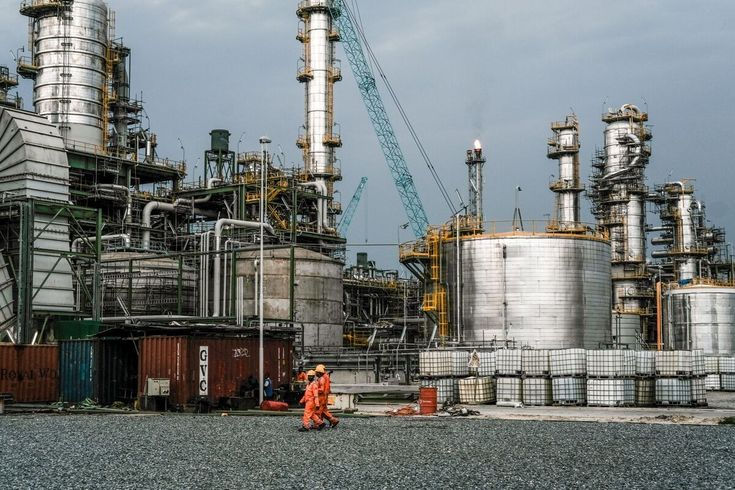
Nigeria's manufacturing sector was once projected to be the engine of Africa's industrial future. Today it is in distress — shrinking in real terms, losing companies, shedding jobs, and falling further behind the global average with each passing year. Understanding why this is happening — and what the consequences are for Nigerian workers and the broader economy — is essential reading for every Nigerian who cares about where this country is heading.
The Numbers Tell a Damning Story
Manufacturing capacity utilisation plummeted from 73.3% in 1981 to 57% in 2024, while the sector's contribution to GDP contracted from 29.9% to 8.6% over the same period.
The average annual growth rate of Nigeria's manufacturing sector between 2019 and 2024 was negative at -0.76% — meaning the sector has been shrinking in real terms over the last five years. Between 2019 and 2023, the manufacturing sector declined by 21%, shedding over ₦1.2 trillion in manufacturing GDP.
The Manufacturers Association of Nigeria reports that 767 manufacturing companies shut down operations in 2023, and over 18,000 jobs were lost in 2024. Except for the cement industry, profit margins contracted by 36% between 2021 and 2023 alone.
These are not cyclical fluctuations. They are structural trends — and they demand honest examination.
The Drivers of Decline
Electricity remains the primary killer of Nigerian manufacturing.
Research on 200 manufacturing firms revealed that power supply irregularities increased production costs by an average of 35%, while poor transportation networks added 15% to 20% to distribution costs. Every Nigerian manufacturer operating a generator is paying an energy tax that no competitor in Vietnam, Egypt, or Morocco carries — a structural cost disadvantage built directly into every product made in Nigeria.
Currency depreciation has made imports prohibitively expensive.
The naira's persistent weakness has made the importation of raw materials prohibitively expensive, squeezing manufacturers' already thin margins. Nigeria's manufacturing sector is heavily import-dependent for raw materials, equipment, and intermediate inputs — meaning every naira devaluation episode directly inflates production costs without any corresponding increase in domestic revenue.
Interest rates have choked access to affordable capital.
The sector's progress has been constrained by multiple macro-headwinds, including the adverse impact of high inflation on household wallets and operating costs, a high-interest environment, and naira volatility. A manufacturer borrowing at 30% annual interest to fund working capital is operating under financial pressure that makes genuine investment in capacity expansion almost impossible.
Multinational exits have removed anchor players.
Several multinational companies have exited the Nigerian market due to the tough business environment — removing not just their production capacity but the supply chain relationships, employment, and technology transfer that anchor manufacturing ecosystems.
What It Means for Jobs
The employment consequences of manufacturing decline are severe and compounding. The manufacturing sector is the highest contributor to employment generation and to government revenue through both company income tax and personal income tax paid by employees.
When manufacturing companies close, the job losses are not simply absorbed by other sectors. Services sector growth — which has been Nigeria's primary GDP driver — does not employ the same profile of workers that manufacturing does. Factory floor workers, technicians, logistics operators, and semi-skilled workers displaced from manufacturing cannot simply transition into technology or financial services employment.
In 2024, unsold inventory surged to ₦2.14 trillion — representing an 87.5% increase from the previous year — as weakened consumer demand, escalating production costs, and declining purchasing power battered manufacturing concerns, many of them SMEs.
The Comparison That Should Embarrass Policymakers
Vietnam's manufacturing growth expanded by 8.7% in 2024, largely attributed to strategic foreign direct investment policies and integration into global trade networks. That country offers 10-year corporate tax holidays for high-tech manufacturers, aligns vocational training with industry needs, and attracted $25.58 billion in manufacturing FDI in 2024 alone.
Nigeria — with a larger population, more natural resources, and a bigger domestic market — attracted a fraction of that investment while its manufacturers were closing facilities and losing jobs.
What Must Change
The path to manufacturing recovery in Nigeria is clear — even if the political will to walk it has historically been absent.
Reliable electricity supply at competitive cost is the non-negotiable first requirement. No manufacturing policy intervention produces meaningful results in an environment where power costs consume margins before a single unit of output is sold.
Exchange rate stability protects the import-dependent production costs that determine whether Nigerian manufacturers can price their products competitively against imports. Policy consistency — the absence of sudden regulatory changes, import bans, and forex restrictions — is what gives manufacturers the confidence to invest in capacity that pays back over five to ten year horizons.
Research suggests that a 50% improvement in infrastructure quality could increase manufacturing output by 23% and enhance export competitiveness by 18%. The investment case for infrastructure as manufacturing policy is not theoretical. It is documented.
The Bottom Line
Nigeria's manufacturing sector is entering its sixth consecutive year of real decline — shedding companies, eliminating jobs, and falling further below its potential with each year that structural challenges go unaddressed.
Manufacturing is structurally weak, with sub-sectors that should be growth drivers performing below potential. Nigeria's economy may be statistically larger after rebasing, but it is not more productive, nor more industrialised.
The workers who lose factory jobs when Nigerian manufacturers close are not statistics. They are Nigerians whose livelihoods disappear into a structural failure that policymakers have acknowledged for decades without resolving.
A country that cannot manufacture cannot industrialise. A country that cannot industrialise cannot create the jobs its growing population needs. Nigeria is running out of time to choose differently.
> Disclaimer: This article is for informational and educational purposes only and does not constitute financial, economic, or policy advice. All data referenced is drawn from publicly available institutional sources including the NBS, MAN, and published research as cited. Data is subject to revision. Readers are encouraged to consult primary sources for the most current figures.


Comments