NGX Hits 198,000 Points: Why This “Bull Run” Looks More Like a Bubble Than a Breakthrough
- momohonimisi26
- Mar 19
- 3 min read

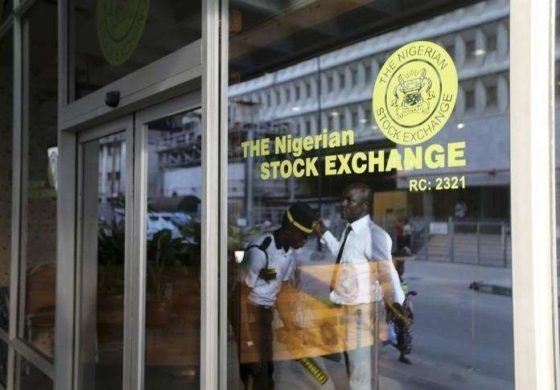
Nigeria’s stock market is on fire. The Nigerian Exchange (NGX) All-Share Index has surged past 198,000 points, delivering over 86% returns in just 12 months. On the surface, this looks like a historic rally, one that signals renewed investor confidence and economic optimism.
But strip away the headlines, and a more uncomfortable question emerges: Is this rally built on solid fundamentals, or are we watching the early stages of a market bubble?
The popular narrative says this is a long-overdue repricing of undervalued Nigerian equities. That’s only half the story. The other half is far less reassuring.
What’s Really Driving the NGX Surge
To understand the rally, you need to ignore the hype and follow the money.
The surge in Nigerian equities is not happening in isolation. It is largely a reaction to macroeconomic pressure, particularly inflation and the weakness naira.
With inflation eroding purchasing power, holding cash has become a losing strategy. Investors are being forced into assets that can preserve value, and equities have become one of the few viable options.
At the same time, limited investment alternatives within Nigeria mean capital has fewer places to go. Real estate is illiquid, fixed income yields have fluctuated, and foreign investments remain difficult for many retail investors.
The result is predictable: liquidity is flooding into the stock market.
That’s not necessarily a sign of strength. It’s often the first ingredient of a bubble.
The Bull Case, And Why It’s Overstated
Optimists argue that Nigerian stocks were undervalued for years, and this rally is simply a correction.
There is some truth here. Certain sectors, particularly banking and telecoms have reported strong earnings. Recapitalisation efforts in the banking sector have also improved investor sentiment.
But here’s the problem: price growth is beginning to outpace earnings growth.
A healthy bull market is driven by improving fundamentals, higher profits, better margins, stronger balance sheets. What we are increasingly seeing is something different: valuation expansion driven by demand, not performance.
In simple terms, investors are paying more for the same level of earnings.
That’s not a structural shift. That’s speculation creeping in.
If you look closely, the signs of overheating are becoming difficult to ignore.
First, the rally is heavily concentrated in a small number of large-cap stocks. This creates the illusion of a broad market boom, when in reality, gains are uneven.
Second, retail participation is rising rapidly, often driven by fear of missing out (FOMO). This is a classic late-cycle signal in emerging markets.
Third, valuation metrics are stretching. Price-to-earnings ratios in some sectors are moving beyond historical averages without a corresponding surge in profitability.
These are not isolated signals. They are textbook characteristics of a market approaching bubble territory.
Nigeria Has Seen This Before
This is not the first time Nigeria’s stock market has experienced a rapid surge followed by a painful correction.
Previous cycles have shown a consistent pattern:
Liquidity drives prices up
Retail investors pile in late
Valuations disconnect from fundamentals
A trigger event sparks a correction
The specifics may change, but the structure remains the same.
The danger is assuming that “this time is different.” It rarely is.
What Smart Investors Are Watching
While headlines focus on index milestones, serious investors are watching different metrics.
They are comparing earnings growth to price growth, tracking valuation ratios, and paying close attention to interest rate movements.
They are also watching for signs of foreign investor behavior. In many emerging markets, foreign capital flows can amplify both rallies and downturns.
Most importantly, they are asking a simple question: Are these prices justified by fundamentals?
Right now, in many cases, the answer is becoming less convincing.
What This Means for You
This does not mean the market will crash tomorrow. Bubbles can last longer than most people expect.
But it does mean that risk is rising, even if prices are still going up.
For Nigerian investors, this is the most dangerous phase of a market cycle, when optimism is high, caution is low, and momentum feels unstoppable.
Chasing returns at this stage often leads to buying at peak prices.
The smarter approach is discipline:
Focus on fundamentally strong companies
Avoid overexposure to overheated sectors
Maintain diversification
Be willing to sit on the sidelines when valuations don’t make sense
The NGX rally may look like a breakthrough, but the underlying dynamics suggest something more fragile.
This is not purely a story of economic strength or corporate performance. It is a story of liquidity, inflation pressure, and limited alternatives pushing capital into equities.
That combination can drive markets higher, but it can also inflate bubbles.
Markets don’t collapse simply because prices rise. They collapse when expectations become disconnected from reality.
Right now, Nigeria’s stock market is getting dangerously close to that line.


Comments